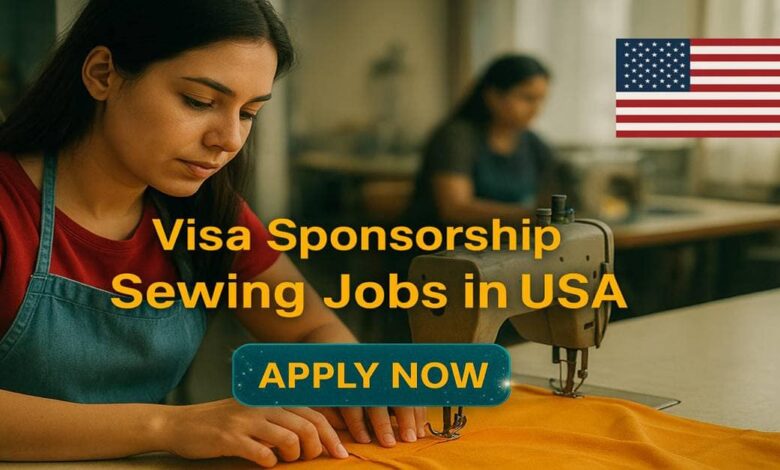
Visa Sponsorship Sewing Jobs in USA offer an exciting opportunity for skilled and aspiring sewers with salaries ranging from 25000 to 35000 USD for entry-level roles 35000 to 50000 USD for experienced sewers and up to 70000 USD for supervisory positions.
These full-time positions in 2026 can be performed in physical workplaces like factories, workshops, or even from home in some cases, giving flexibility to suit different lifestyles. Whether you are a passionate tailor, an industrial sewing machine operator, or a creative embroidery specialist, this career allows you to transform fabrics into art, build financial stability, and take pride in craftsmanship that truly matters.
Details:
- Job Title: Visa Sponsorship Sewing Jobs in USA
- Location: United States (Multiple locations depending on employer)
- Visa Sponsorship: Available (H-2B, EB-3, or other relevant work visas)
Requirements for Sewing Jobs in USA:
- Educational Background: The employment of SOC 261 occasionally necessitates a high school diploma or a general equivalency diploma (GED).
- Work experience in the textile industry, fashion design, or stitching may prove advantageous.
- Technical Proficiency: The candidate must possess a comprehensive understanding of the operation of stitching machines, the cutting of materials, and the manipulation of a variety of fabrics. Additionally, it is imperative to be acquainted with measurements, patterns, and modifications.
- Attention to Detail: In sewing positions, particularly those that involve fashion designer wear or made-to-order apparel, the degree of delicacy and closeness of work are crucial.
Duties for Sewing Jobs in USA:
- Fabric Cutting and Measuring: It is crucial to adhere to the correct cutting and measuring procedures during the production process to ensure that the final product is manufactured to the correct specifications.
- Reading and Following Patterns: In order to manufacture specific textiles or garments, tailors and seamstresses must possess a comprehensive understanding of pattern instructions, layouts, and any other technical drawings.
- Altering Clothing: A variety of sewing jobs necessitate the modification of clothing, including hemming, resizing, or mending garments that have been damaged in some manner.
- Quality Control: Some of the job responsibilities include ensuring that the products are free of defects and that the seams have the appropriate number of stitching, as well as any visible loose threads.
Check Also: Visa Sponsorship Chef De Partie Jobs in USA
Benefits of Sewing Jobs in USA:
- Consistent Income and Overtime Compensation: Sewing positions provide a consistent salary, as well as the potential for performance-based incentives and overtime.
- No formal education is necessary: The majority of sewing positions do not necessitate advanced qualifications, rendering them accessible to individuals with rudimentary training or experience.
- Job Security and High Demand: Long-term employment stability is guaranteed by the constant demand for skilled sewers in the textile, fashion, and manufacturing sectors.
- Prospects for Professional Development: Workers have the opportunity to progress to supervisory positions, pattern creation, quality control, or even establish their own tailoring business.
- Creativity and Skill Development: Skills in fabric handling, stitching techniques, and garment construction are improved by sewing employment, which facilitates creativity in the workplace.
- Work Options That Are More Flexible: Numerous sewing positions provide the flexibility to work according to one’s schedule, whether it be full-time, part-time, or freelance.
- A Workplace That Is Comfortable: Sewing jobs are predominantly indoor-based, frequently occurring in factories, workshops, or at home, in contrast to physically demanding occupations.
- Perks and Benefits for Employees: Sewing professionals are frequently granted health insurance, paid leave, retirement plans, and incentives by their employers.
- Opportunities for Visa Sponsorship: Countries such as the United Kingdom, Canada, Portugal, and Australia frequently provide skilled workers with visa-sponsored tailoring positions.
- Business Opportunities and Self-Employment: Many sewing professionals establish their own tailoring, embroidery, or fashion enterprises with the appropriate experience, which provides them with financial independence.
Salary Expectations:
The compensation for sewing jobs in the United States is contingent upon factors such as the job description, experience, and the location of the job. Sewing professionals can anticipate an average salary of:
- Entry-Level Positions: $25,000 to $35,000 annually
- Experienced Sewers: This amount is typically between $35,000 and $50,000 annually.
- Specialized Positions (e.g., Pattern Makers, Tailors): The annual salary ranges from $40,000 to $60,000.
- Supervisory Positions: an annual salary of fifty to seventy thousand US dollars
Types of Sewing Jobs in USA:
A tailor is a professional who creates clothing for specific clients, modifies it by adding or subtracting sizes, and repairs it.
- Seamstress/Seamster: Sewers, tailors, or stitchers who sew and join clothing, accessories, or household textiles.
- Pattern Maker: Pattern makers are responsible for the creation of apparel patterns in accordance with the designer’s vision. They are also engaged in the production and preparation of garments.
- Costume Designer: Specialty costume designers, such as theatrical costume makers and tailors, are responsible for designing and stitching costumes for stage burlesque, motion pictures, and other events.
- Upholsterer: Sewers are responsible for the fabrication and construction of furniture, transport vehicle seats, and other similar products.
- Embroidery Machine Operator: These employees employ embroidering machines to incorporate detail works, insignia, or brand logo designs into apparel and fashion fabrics.
- Garment Assembler: Garment assemblers are manufacturing laborers who are responsible for the sewing and assembly of garment components or other related accessories.
- Textile Worker: This industry employs a variety of individuals, including weavers, knitters, and spinners, as well as tailors who transform fabrics into practical items and quality controllers.
- Sewing Supervisor: Sewing supervisors are responsible for coordinating sewing sub-groups to ensure that the established production and quality objectives are met.
- Industrial Sewing Machine Operator: These professionals operate industrial sewing machines in a production environment and sew through thick fabrics, such as canvas or leather.
Application Process of Visa Sponsorship Sewing Jobs in USA:
- Job search platforms: These platforms include social networks, job search websites, forums, employment-related boards, company websites, and traditional career sites.
- Create a Resume and Portfolio: Develop a resume that highlights your sewing experience, qualifications, abilities, and accomplishments. If it is feasible, include the portfolio of the most exceptional work completed thus far.
- Apply for Jobs Online: You may submit your resume and cover letter directly through the company’s website, currently available online employment search sites, or employment agencies that specialize in textile and sewing positions.
Conclusion:
Visa Sponsorship Sewing Jobs in USA provide stable income, skill development, and career growth opportunities across multiple roles. With flexible work options and visa support, sewers can build long-term employment and even start their own businesses. The industry values creativity, precision, and dedication, making it a rewarding path for both beginners and experienced professionals.
Frequently Asked Questions:
How much do sewing workers earn in the USA?
Sewing laborers in the United States make an average hourly wage of approximately $13 to $20, dependent upon their industry and level of experience.
What are the requirements to work as a sewing worker in the USA?
Basic stitching skills, a comprehension of industrial sewing machines, and attention to detail are requirements for the majority of sewing positions. On-the-job training may be provided to certain employers.
Is sewing a good career?
The opportunities are vast, and the rewards are measured in the quality of craftsmanship and the financial stability that a career in sewing can offer.